Hiking the Inca Trail to Machu Picchu: Cusco with Kids
Hi friends, I’m writing to you from Peru and we just did the two-day Inca Trail with kids, and I can’t wait to tell you all about this amazing family trip!Something that we really love about traveling is soaking up the culture of the country we’re visiting. And man, did we do that during our spring break in Peru. The views, the food, the history… it was such a rich experience that we can’t wait to tell you all about it so you can experience it too.
If you’ve been reading along for a while, you know we’re a family of five kids (ranging from ages 9 to 18), each with their own interests. Planning trips requires activities that suit everyone. Our goal was to find a truly unique experience the whole family would love, while also fulfilling a lifelong dream of visiting one of the New Seven Wonders of the World.
*Disclaimer: This post may contain affiliate links. Opinions shared are my own, and I only endorse products I support. By clicking on any of the links below, I may get a small commission if you purchase at absolutely no additional charge to you. I appreciate your support.*
We had a friend, Ryan, from the travel family Ragged Shoes, whom we met while full-time traveling through Bali tell us, “You really have to do the Inca Trail if you’re going to go to Machu Picchu.”
So, we looked into it. There is a classic 4-day Inca Trail hike, but it’s probably too hard with kids, a bit dangerous, and not suitable for pregnant women or anyone with back problems. Then, there is a 2-day Inca Trail. We opted for the 2-day trek, and it was amazing—truly—but also really, really hard. I’m not going to lie; it was a hard hike.
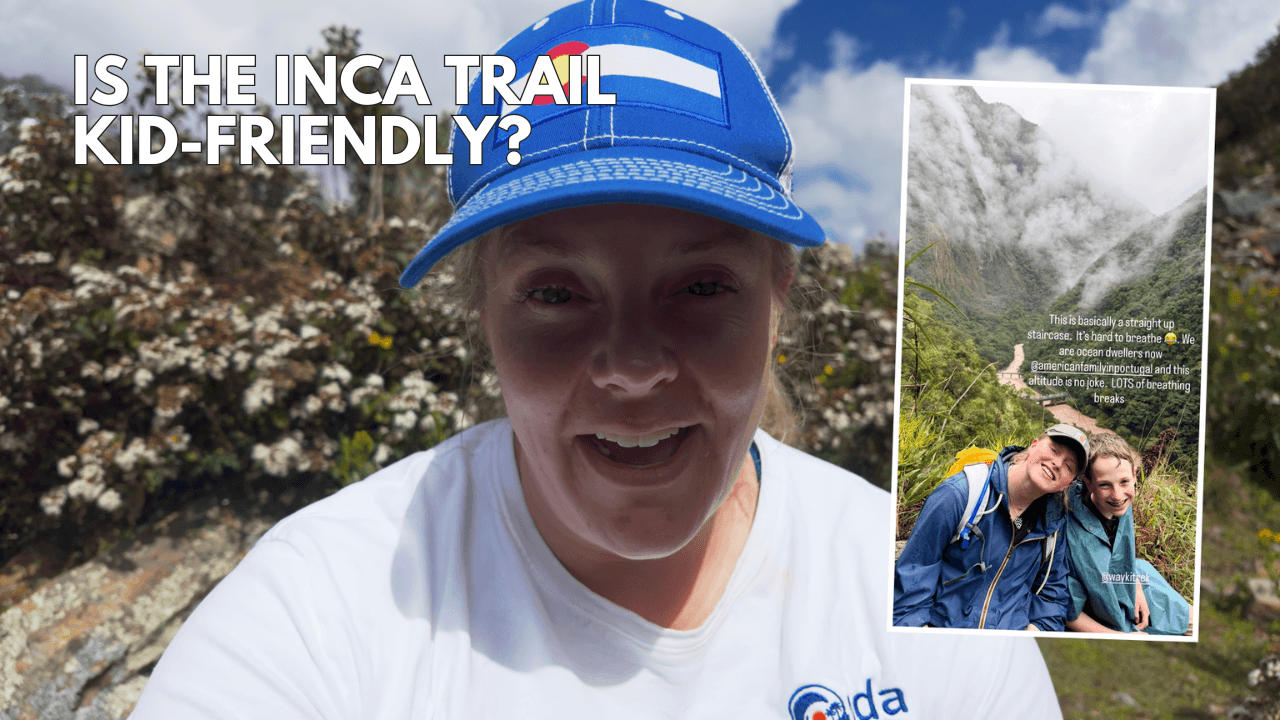
Is the Inca Trail Kid-Friendly?
One of the biggest questions we had leading up to this trip was if the Inca Trail is kid-friendly since our littlest one is 9 years old. The general answer is:It can be difficult for children younger than 6 or 7 years old. If your children are sporty or used to long hikes, they can do it. Otherwise, it might be a rough trip for both you and your kids.
On the first day, you hike up the mountain, basically straight up an original Incan staircase for 1 to 2 hours. Our guide prepared us perfectly for this reality, but even if you are relatively fit, the physical toll is intense. Because our family currently lives at sea level in Lisbon, Portugal, coming straight to Peru was a major kick in the pants! The altitude is 13,000 feet above sea level. This can cause altitude or motion sickness. We had to take a lot of breathing breaks on that staircase.We highly recommend you bring lots of water, but also comfortable shoes and a light backpack.
Our kids where so proud when they hiked Machu Picchu!
Getting to see Machu Picchu dor the first time was something we’ll never forget.
Once you survive the stairs, the trail reaches a halfway point and flattens out, undulating up and down. Finally, you climb a little more to reach the Sun Gate (Intipunku). This was how people used to enter Machu Picchu in ancient times, and seeing the citadel open up below you from the top makes you feel like you truly earned it. Our oldest daughter even noted the next day how much better it felt to have earned our way into such an incredible landmark.
The hike itself took us all day. I think we took about 6 hours to complete the trail. More fit folks that were passing us were faster, of course, but our guide told us the longest she ever did with a group was 12 hours! This time varies based on your fitness level and your ability to hike up. It is always humbling to see the porters running up and down the trail. However, don’t stress about this. Your guide with Wayki Trek is going to take the pace you need and you can do this!
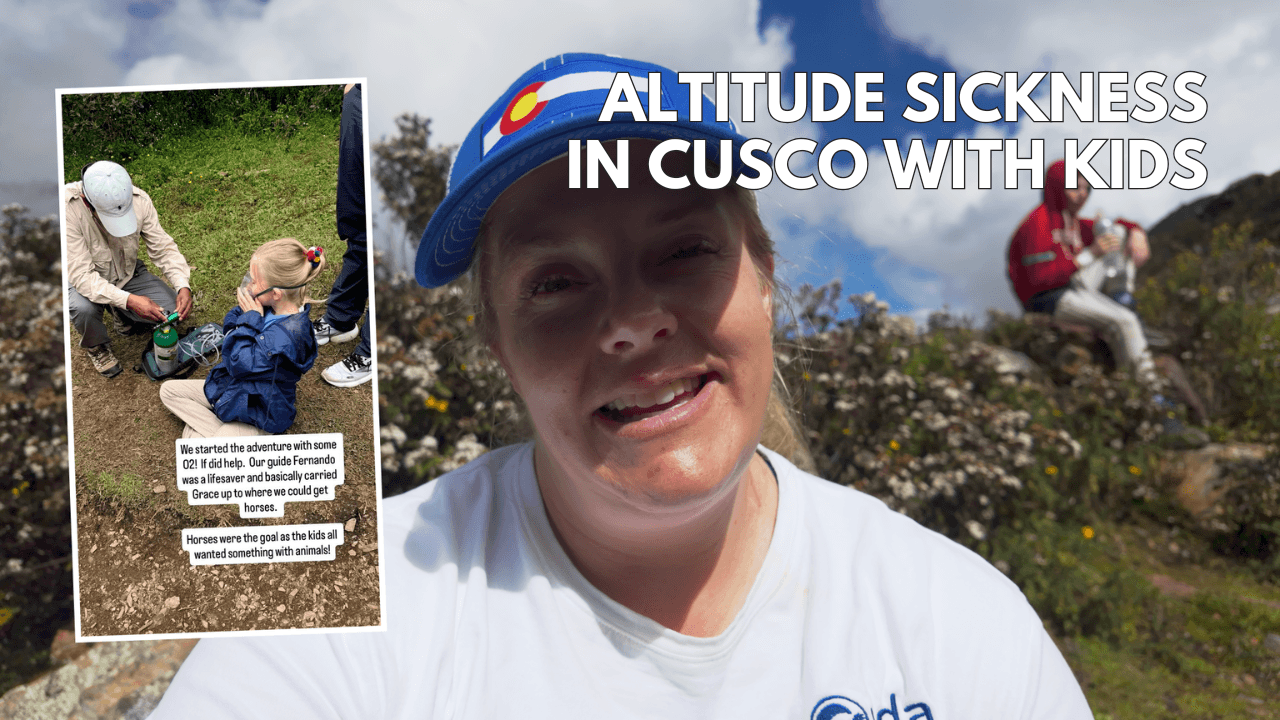
Your guide also will be prepared with things you aren’t… a first aid kit, perhaps oxygen (our youngest used this on another hike we did in Peru due to the altitude). They are invaluable!
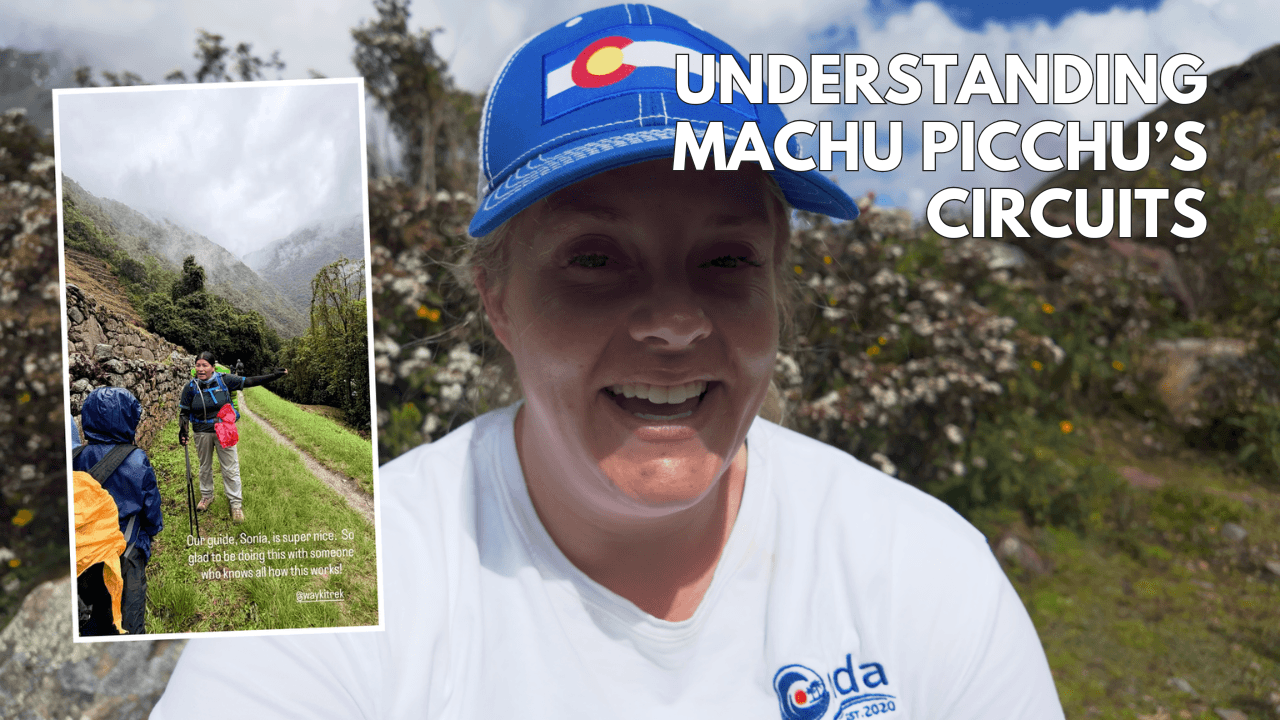
Understanding the Circuits of Machu Picchu
You will be able to find many incredible photo spots across all the circuits of the Inca Trail!
When planning your visit to Machu Picchu, one of the most important decisions you’ll make is choosing your circuit. To protect the ancient sanctuary and manage crowd flow, Peru’s government enforces strict one-way circuits that require specific timed-entry permits.
Here’s a quick breakdown of how they work:
Circuit 1 (Panoramic): This circuit focuses on the upper terraces and elevated view points. It gives you those sweeping, classic postcard views of the citadel, but it doesn’t take you through the lower urban ruins.
Circuit 2 (Classic): The most popular single ticket for first-time visitors because it attempts to combine the classic upper photo spot with a tour through the central ruins. Because of this, it is also the busiest and sells out fastest!
Once you get to the Temple of the Sun in Machu Picchu you’ll feel you’ve made it!
Many trails of Machu Picchu will make your kids feel like explorers!
Circuit 3 (Royalty and Lower Citadel): Covers the lower archaeological sector, including the Temple of the Sun, the Royal Tomb, and the House of the Inca, giving you an up-close look at the intricate stonework without the heavy upper-terrace crowds.
Why the Combination of Circuits 1 and 3 Was Perfect for Us
While most travelers try to grab Circuit 2, our guide from Wayki Trek recommended pairing Circuit 1 and Circuit 3 across our two days, and it honestly ended up being the best way to experience Machu Picchu with our kids!
On day 1, finishing the 2-Day Inca Trail brought us through the Sun Gate (Intipunku) and into the upper terrace area of Circuit 1. We got to take in that breathtaking, sweeping overview of the ruins right at sunset after a long day of hiking.
Then on day 2, after a night in Aguas Calientes, we returned in the morning to explore Circuit 3. Walking through the lower royal sector gave the kids a different perspective. We were right up against the incredible stonework, exploring ancient temples with plenty of room to move without feeling rushed by the massive tour groups on Circuit 2.
Splitting our time between the panoramic heights on day 1 and ruins on day 2 gave us the best of both worlds! So, after finishing the hike on the first day, you catch a glimpse of Machu Picchu from above and catch a portion of Circuit 1.
Instead of tent camping on the mountain (which is standard for the 4-day trail), the 2-day trek allows you to take a bus down to sleep in Aguas Calientes (Machu Picchu Pueblo) at a hotel. And let’s be honest, this is quite a bit nicer than camping! Aguas Calientes is a cute, highly touristy town right at the base of the mountains with a river running through the middle, tons of restaurants, and hot springs that felt incredible to soak in after our hike.
We took a few breaks to take in the views but also because it was a difficult hike for most of us.
The next morning, we took the bus back up to Machu Picchu to explore Circuit 3. Splitting the experience across two days gave us the best of both worlds: the triumph of the hike and a fresh, rested morning to tour the lower ruins.
Logistics and Why Choosing a Private Tour Group is the Best Option for Machu Picchu
1. Booking Permits & Private Tours
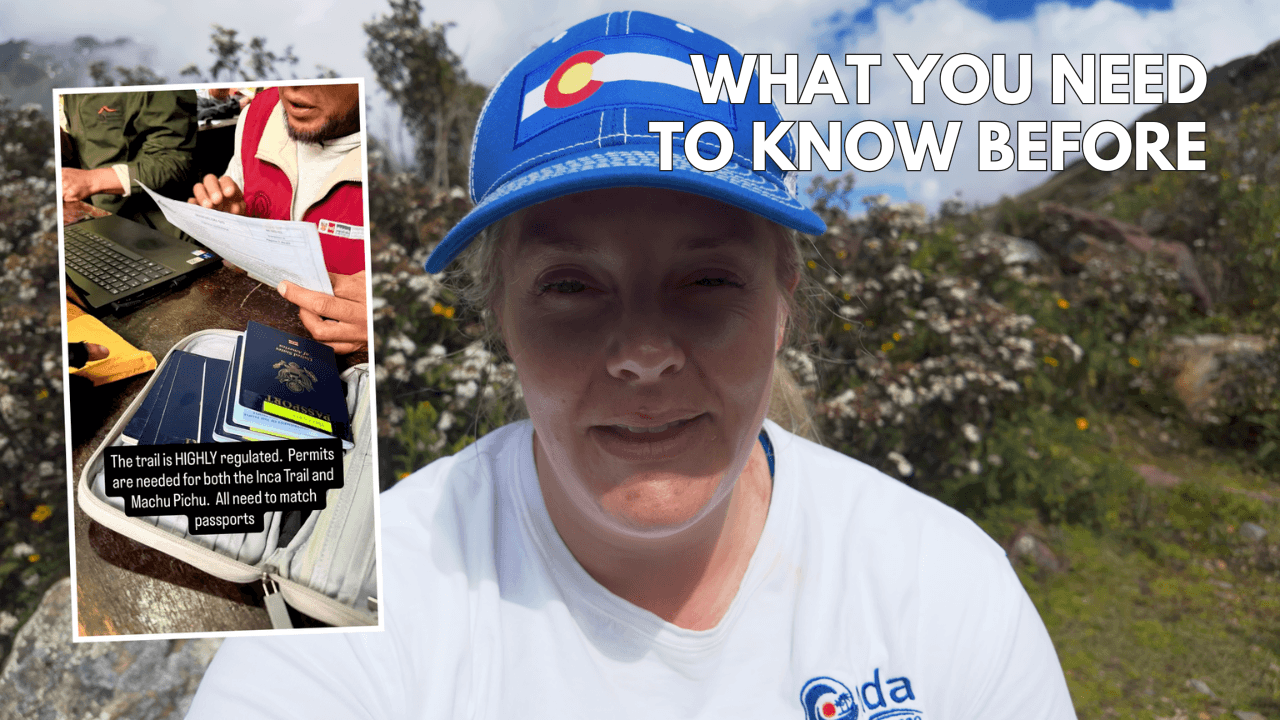
If you want to pull this off, the absolute most important things to lock down are permits and timed entries. There is a strict, limited number of permits available for the Inca Trail, and entries for Machu Picchu sell out incredibly fast. You have to align these dates perfectly!
We ended up booking through a tour company called Wayki Trek, and they were amazing. They coordinated all the logistics, transportation, and permits seamlessly. We highly recommend booking a private group tour if you have a larger family or younger kids. I didn’t want our kids to feel pressured by a mixed group, nor did I want them slowing anyone else down.
Sonia from Wayki Trek was an absolute rockstar during our trip, she ensured everything went smoothly!
Our guide, Sonia, was patient, super clear, and fantastic with the kids. Having a local guide is also a major safety net. Landslides are incredibly common in this region; literally two days before our trek started, a landslide closed our original path. Thankfully, there are two to four backup Inca trails, and Sonia redirected us without a hitch. Keep in mind that there is zero cell coverage on the trail, so having an experienced guide who knows every narrow or unstable turn is invaluable.
2. Combating Altitude Sickness
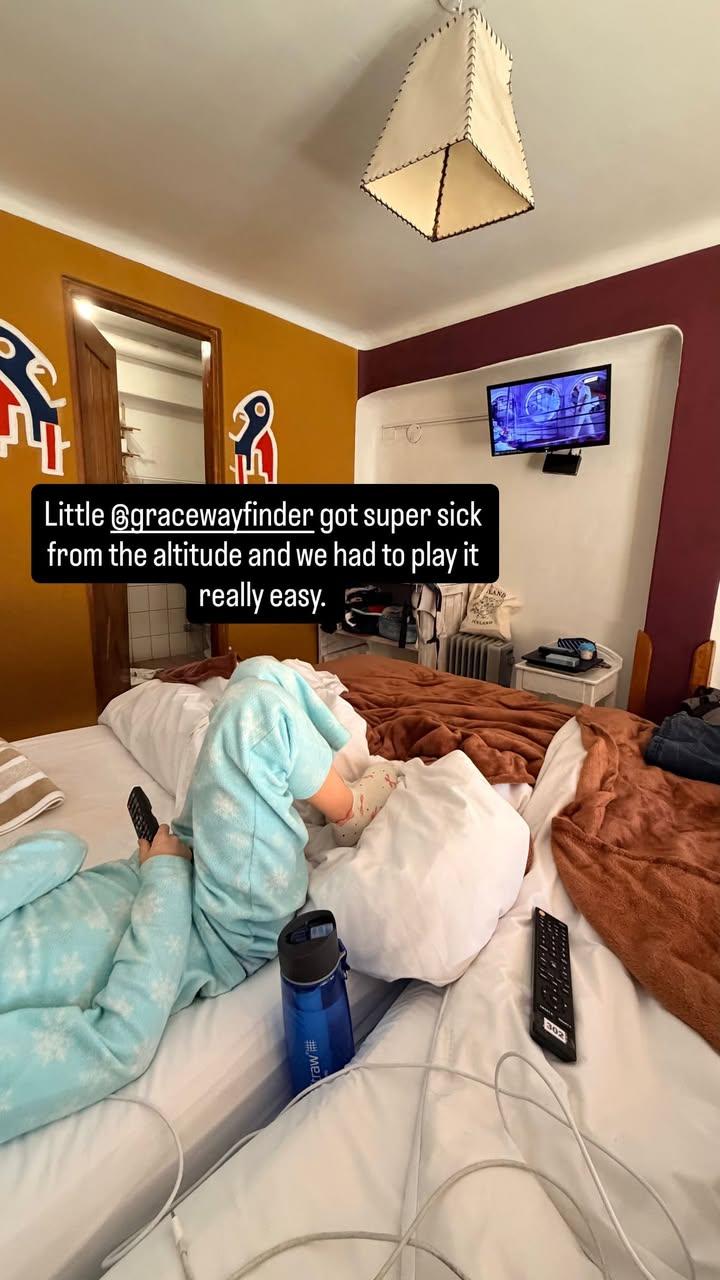
This is a hard one, as you never fully know how your kids will react to the elevation. And as soon as we arrived, our kids got sick because of the altitude, so we had to take it slow in order to be able to do the Inca Trail!
Important elevation check: Cusco sits at around 11,152 feet (3,400 meters), while Machu Picchu drops down closer to 7,972 feet (2,430 meters). You actually descend into the Sacred Valley when you go to the ruins, meaning Cusco is the real altitude test!
The altitude hit us hard. Our youngest, Grace, got very sick, vomiting three times on our first day in Cusco and remaining ill on the second day. And us, as adults, we dealt with constant nausea and headaches.
Acclimate for 3 Full Days: Do not rush the trek. Stay at least three full days in Cusco or the Sacred Valley beforehand to give your bodies time to adjust. We used this time to hike one of the Rainbow Mountains as a test run. There is quite a bit to do in and around Cusco and we all really liked this city. In fact, we liked it more than Lima, which we visited after! We all agreed we’d go back to visit Cusco (minus Grace, who got so sick she now hates Peru as a whole).
We had to stay at our hotel the first few days due to altitude sickness.
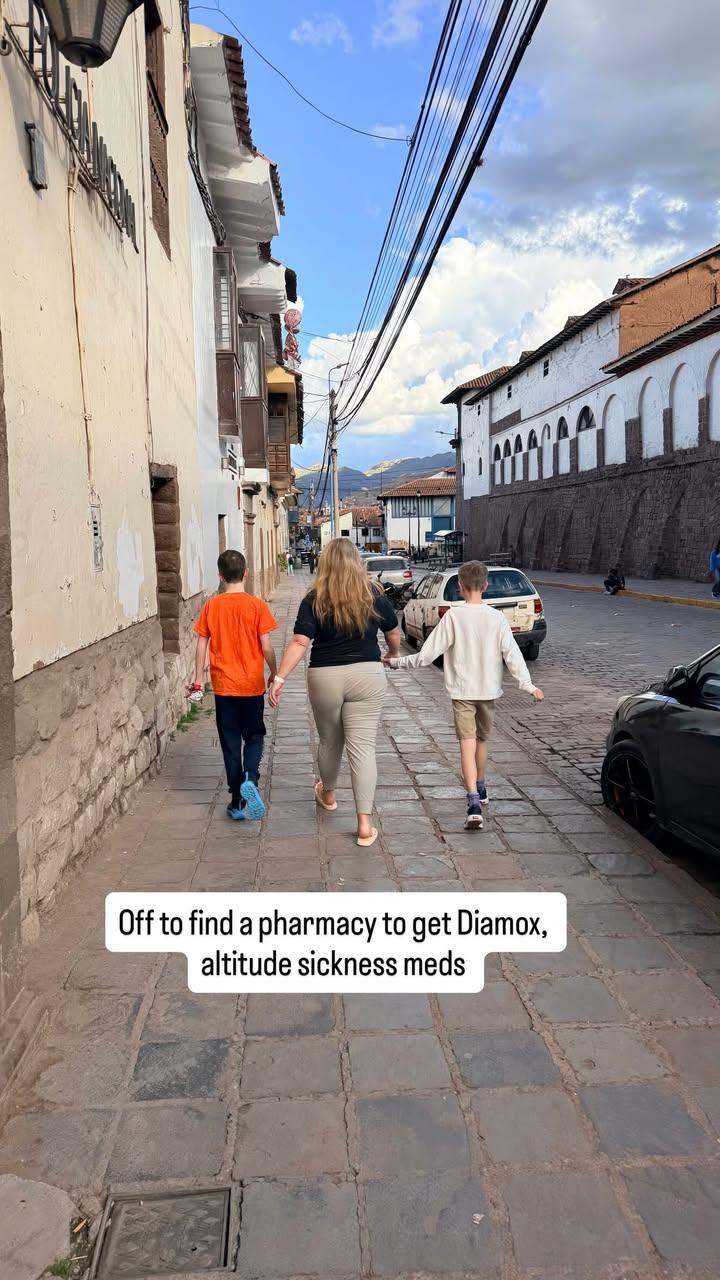
The good thing? There are pharmacies in case you feel bad from altitude as it’s common here.
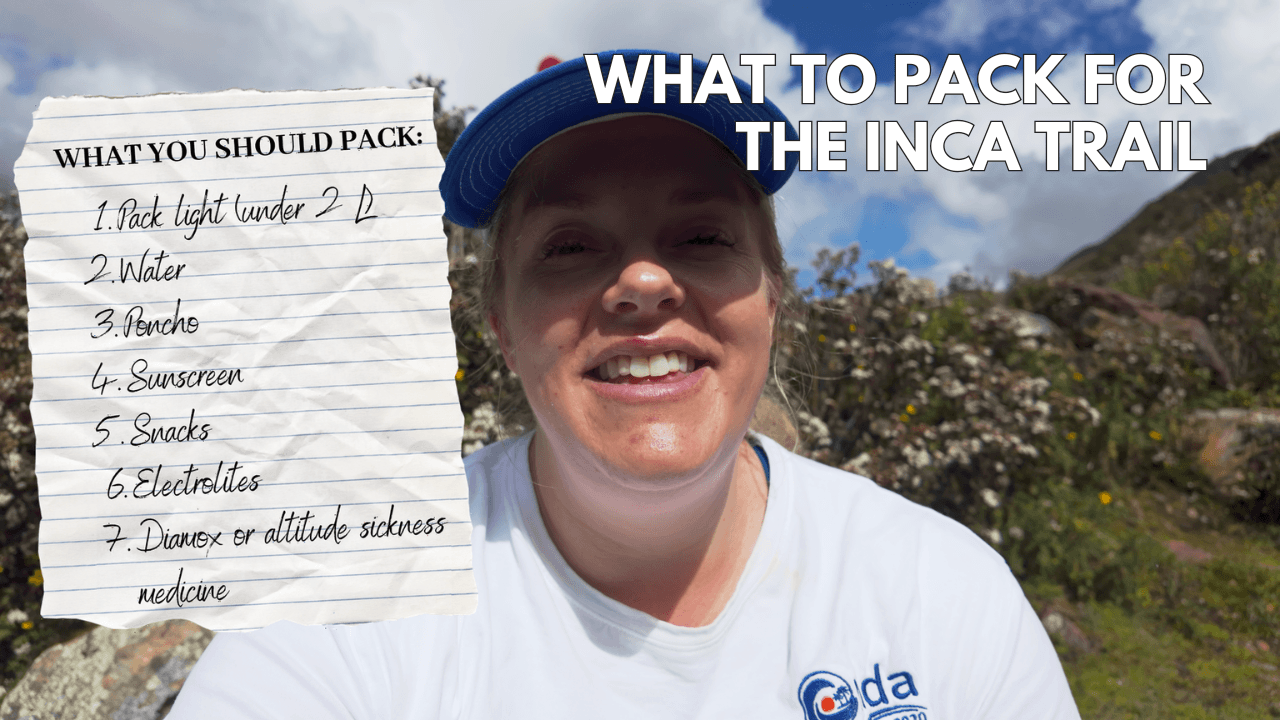
Get a Diamox Prescription: We highly recommend talking to a doctor about Diamox (altitude sickness medication). It’s easy to get to Cusco, but you need to start taking it two to three days before you hike or change elevation. We went and got it from a local pharmacy right when we got there as Grace was already sick. It’s cheap and easy to find in Cusco, or you can try to get it from home before you go.
Electrolytes are Mandatory: Our guide’s number-one tip was to mix electrolytes into our water bladders and bottles. It drastically helps combat the headaches and dehydration caused by sweating at high altitudes. We went for the apple Gatorade, which is easy to find in any little convenience store all over Cusco, which was a nice mix and not too much food dye.
3. Packing Light and Bathrooms in the Inca Trail with Kids
Because this is a day hike, you don’t need the headlamps or towels required for the 4-day trek. We still packed them (which were on our packing list from Wayki), but they weren’t needed. We used the towels for the hot springs later!
The goal is to keep your pack as light as possible. Furthermore, Machu Picchu rules dictate that no bags over 25 liters are allowed inside the archaeological site.
The Food Situation: Our tour company provided healthy, delicious box lunches that we carried in our packs. It was perfect hiking fuel. Be careful with tours that cook fresh food directly on the trail, because plates are often rinsed in river water; food poisoning is a known risk on the 4-day route! We packed extra salty crackers and “motivational snacks” (like a bag of M&Ms and Easter candy since we hiked on Easter Sunday) to keep the kids moving.
Unpredictable Weather: Mountain weather changes in a flash. It was pouring rain when we stepped off the train, sunny enough to give us all sunburns a few hours later, and then back to rain. Pack high-SPF sunscreen, sunglasses, sun hats, and reliable rain ponchos.
Some parts where easy and the weather, though rainy, was honestly manageable.
Bathroom Situation: Trail options are very limited. There is a bathroom on the train (use it, as it’s the best one you’ll get) and basic septic-hole facilities at both the start of the trail and the top of the staircase halfway point. There are no bathrooms at the Sun Gate and no bathrooms inside Machu Picchu itself. There are bathrooms at the entrance to Machu Picchu, but you won’t get to that until the end of your Inca trail adventure. Pack a small baggy and toilet paper just in case for emergency waste. (Do your best to avoid any risky foods or liquids before you hike! I cannot imagine having diarrhea during this hike.)
Getting the Kids Excited Before You Go
To make the trip meaningful, teach your kids about the Incas beforehand. Our kids are much better at watching videos than listening to a guide on a hot trail, so we watched YouTube videos the night before the trek to make the history come to life.
Warn them ahead of time that you will want to document this lifelong memory with a lot of photos! They definitely got tired of the camera, but hey… how many times in your life are you going to be standing in Machu Picchu?
Choosing the Right Trek Route in Machu Picchu for Your Family
The Inca Trail might be tiring for kids, but that doesn’t mean you have to put off your trip. There are several ways you can experience Machu Picchu depending on your family’s physical stamina and timeline:
Classic Inca Trail: This incredible tour involves walking, camping, and panoramic views! However, it can be very tiring for kids, carries food safety risks on the trail, and isn’t suitable for pregnant women or people with back problems.
If you’re looking to spend more time in Machu Picchu maybe you should consider a longer hike.
One-Day Inca Trail:Perfect for families with active kids 7+. You get the triumph of hiking to the Sun Gate on day 1, sleep in a hotel in Aguas Calientes overnight, and explore the citadel relaxed on day 2.
Machu Picchu Half Day: If your kids are very young and get tired easily, you can stay in Aguas Calientes and take the bus straight up to the citadel. A half-day tour lasts about 4 hours and includes all transportation and entry tickets.
Why We Recommend Wayki Trek
When researching family-friendly operators, finding a company that specializes in personalized private tours makes all the difference. Booking with Wayki Trek gave us:
Wayki Trek took the time also to prepare us a few days in advance and gave us some great T-shirts at the end!
Thanks to Wayki Trek we manage to get this amazing view (different perspectives) the two days!
Zero Group Pressure: We hiked entirely at our family’s pace without worrying about slowing down strangers or feeling rushed on steep stairs.
Seamless Permits: They handled all complicated entry permits, train tickets, and transfers. We even had a little issue with our passports (I sent our old passport numbers accidentally and when we went to start the hike, we almost didn’t get in! Sonia was super patient and helped as I showed photos of the old passports and our current passports and we worked it out).
Kid-Centric Guides: Local guides like Sonia know how to keep kids engaged, keep everyone safe on narrow trails, and flex the itinerary if someone gets hit by altitude sickness.
Best Times to Visit Machu Picchu with Kids and Where to Stay
We can say Spring was such a great time for us as the views where stunning!
Best Seasons for Kids
Machu Picchu is open all year round, so if you’re looking for the best seasons, here’s what you can expect depending on your preferred dates. Also, keep in mind that some seasons may not be that suitable for kids, so let’s break down what each season has to offer.
Spring (March–April): Easter/Spring Break is one of the best times for families! The rainy season is ending, trails are green, flowers are blooming, and temperatures are mild. Plus, as a shoulder season, you’ll find fewer crowds and better rates.
Summer (May–August): Very popular, sunny, and dry, perfect for views! However, it gets crowded and hot. You must book tours and hotels far in advance. Tip: Do activities early in the morning or evening to beat the heat.
It was a rainy day when we started the Inca Trail but the scenery was beautiful regardless.
Luckily, the weather got better and we had a bit of sun!
Fall (September–November): Great weather, moderate temperatures, and fewer crowds. Keep in mind the rainy season approaches in late fall.
Winter (December–February): Rainy season in Peru. The main Inca Trail closes in February for maintenance as trails get slippery. Road options are limited, though you will encounter fewer tourists. Bring heavy, waterproof gear!
Where to Stay in Peru with Kids
No matter where you choose to stay, most hotels offer family rooms or connected rooms, perfect for big families or if you’re looking for more space. Here are a few recommendations depending on location:
We decided to stay in Cusco as it’s the best way to move around Peru if visiting Machu Picchu with kids.
Cusco: The best places to stay here are hotels near San Blas or the historic center as most tours offer pick ups in these locations. Consider hotels like:
JW Marriott El Convento Cusco:We stayed here once we got back from the Inca Trail and it was honestly the best decision. It was comfortable and had a lot of space for our crew. The food was great and the best part is that it also had a pool, so we could unwind and relax after hiking Machu Picchu!
CASA CRISTOBAL Siete Cuartones: If you’re looking for a cozy, charming boutique option just a short walk from the Plaza de Armas, this hotel is the perfect choice. It offers family suites (with mezzanine attics that kids love!) and a quiet inner courtyard garden.
Casa Matara Boutique: This hotel is located near the San Pedro Market and has easy access to all of Cusco’s main sights, making it perfect for first timers. It also offers great family rooms. It’s a great budget-friendly option for families who want a clean and central hotel in Cusco.
When we arrived we stayed in the hostal Andenes del Sol, it was close to the historic downtown.
The food in Andenes del Sol was good. This was a buffet style breakfast.
Sacred Valley: This is also a popular location as many tourist attractions are nearby. Consider staying in Urubamba or Ollantaytambo for easy access to activities, and a lower altitude than Cusco. Some hotels are:
Casa Inka B&B: This property is located just minutes from the main plaza and the train station, making early morning departures for the Inca Trail or Machu Picchu completely stress-free! You’ll find great food and rooms with incredible views of the mountains.
Ayllu B&B Ollantaytambo: If you want to be steps away from the Ollantaytambo ruins, then this is a great budget-friendly choice. Here you’ll find family rooms for your crew and the best part is that they offer luggage storage while you go out in case you need it.
Casa Yanahuara Valle Sagrado – Urubamba: If your family is looking to slow down then this is the option for you. This hotel has really beautiful gardens, and you’ll be able to see a bit of the Andean peaks while acclimating comfortably before heading up to the Inca Trail.
Best Things to Do in Cusco and The Sacred Valley with Kids (Pre/Post-Trek)
Give yourselves downtime to rest after the trail, then enjoy these amazing family-friendly cultural activities:
What to Do In Cusco with Kids
ChocoMuseo: An entertaining workshop where kids learn cacao history, make their own chocolate bars, and take them home! It’s SUPER small, to be honest, but has a great bathroom. It’s really more like a giftshop, but you can book a little workshop. There is also a nice bakery where you can buy treats and sit down for a while.
San Pedro Market: Great for trying local fruits and seeing daily life. If your kids like cooking, book a chef-led market walk and cooking class. (Note: Skip the stroller here due to narrow aisles; use a baby carrier for little ones). We had lunch in this market. We randomly picked a fish dish (without knowing it). The kids were skeptical at first, but loved the fish so much we went back and ordered two more!
In the San Pedro Market you’ll be able to find many gifts for your family!
The craftsmanship of San Pedro market’s artisans is incredible!
Planetarium Cusco: Spend an evening learning about Andean astronomy with outdoor stargazing under clear mountain skies (~$23.75/adult, ~$16.75/kid).
Sacsayhuamán Ruins & Qorikancha: Explore massive stone walls above Cusco, followed by a guided tour of the ancient Inca Sun Temple. Next, we visited Qoricancha, one of the most important temples of the Inca Empire. We hiked up to this, which is a hike if coming from downtown. It was a beautiful hike/walk. We didn’t want to pay the entrance fee as it was closing soon (and it’s a bit expensive for Cusco), but it looks really nice. We enjoyed the views from the entrance instead.
We visited the Sacsayhuamán Ruins before the Inca Trail to get us ready for the next big adventure.
The kids also took some time to rest while getting acclimated to the Sacsayhuamán Ruins altitude!
Rainbow Mountain and Red Valley: A stunning day hike where kids can spot alpacas, llamas, and vicuñas along the way! I highly recommend this! We had a great driver that we found through a local tourist shop in Cusco. He was so kind. His English was a little rough, but he made up for it with amazing kindness and patience. He even carried our youngest on his back! Prep with jackets, hats, and gloves, as this hike gets cold, but well worth the visit to Rainbow Mountain.
The Rainbow Mountain was an amazing experience, and also an easier one with kids!
What to Do in Sacred Valley for Families with Kids:
Pisac Market and Ruins: Combine breathtaking mountain terraces with one of the most colorful artisan markets in the valley (great for fresh bread and alpaca socks!).
Tip: If you’re traveling with little ones, a baby carrier is better as the streets can make strollers a bit tricky to handle.
Humantay Lake: Booking a horseback tour to Humantay Lake is probably the best way to enjoy this tour without getting tired. You get to ride horses while taking in the breathtaking views of the snow-capped Andean peaks before a short final walk to the lake’s stunning turquoise waters. It’s an unforgettable, kid-friendly experience that you won’t want to miss. We absolutely loved it!
On a more relaxing note, we also took the time to visit the beautiful Humantay Lake.
Maras Salt Mines and Moray Terraces: A quick half-day tour showcasing circular agricultural terraces and thousands of salt ponds cascading down a canyon like a snowy wonderland.
Ziplining or Horseback Riding: Try 4 different zipline cables or opt for a relaxed horseback ride through farms and ancient ruins to rest tired legs after the trek.
Hiking the 2-day Inca Trail with kids is tough, but earning your way to the Sun Gate is well worth the effort. I am so glad we used a private guide, could go at our own pace, and were able to accomplish this. I know our kids will be remembering this trip for a long time. Getting kids to do hard things and see they can do hard things is one of the best things we can do for them. Bonus: this one comes with an amazing visit at the end!
















 Facebook
 Pinterest
 Youtube