

Last updated: . Updated elephant-welfare guidance, accreditation checks, child supervision, historical tour prices and inclusions, and the distinction between our past hands-on visits and observation-first planning. Date information added October 30, 2026.
Elephants at a muddy pool during our past visit · Scene from our film (20 sec)
Playback isn’t available here. Open the full film on Vimeo ↗
We had three different elephant encounters while staying in Chiang Mai. These are our past family memories, including hands-on activities, alongside what to consider about elephant welfare when planning a visit today.
Elephants were high on our list when we headed to Chiang Mai. We were full-time travelers at the time and stayed for a month, which gave us time for several different encounters. Chiang Mai offered much more than elephants, but those visits became a memorable part of our stay.
We had three different elephant encounters, and each had its own memories: muddy water, a photographer and sugarcane, and a shorter village visit with a baby elephant. I’ve kept those stories separate below. Our films add glimpses of those Chiang Mai days, including a separate stop to learn about elephant-dung paper.
Watch our original related film on Vimeo
A memory from our family’s Chiang Mai elephant encounters.
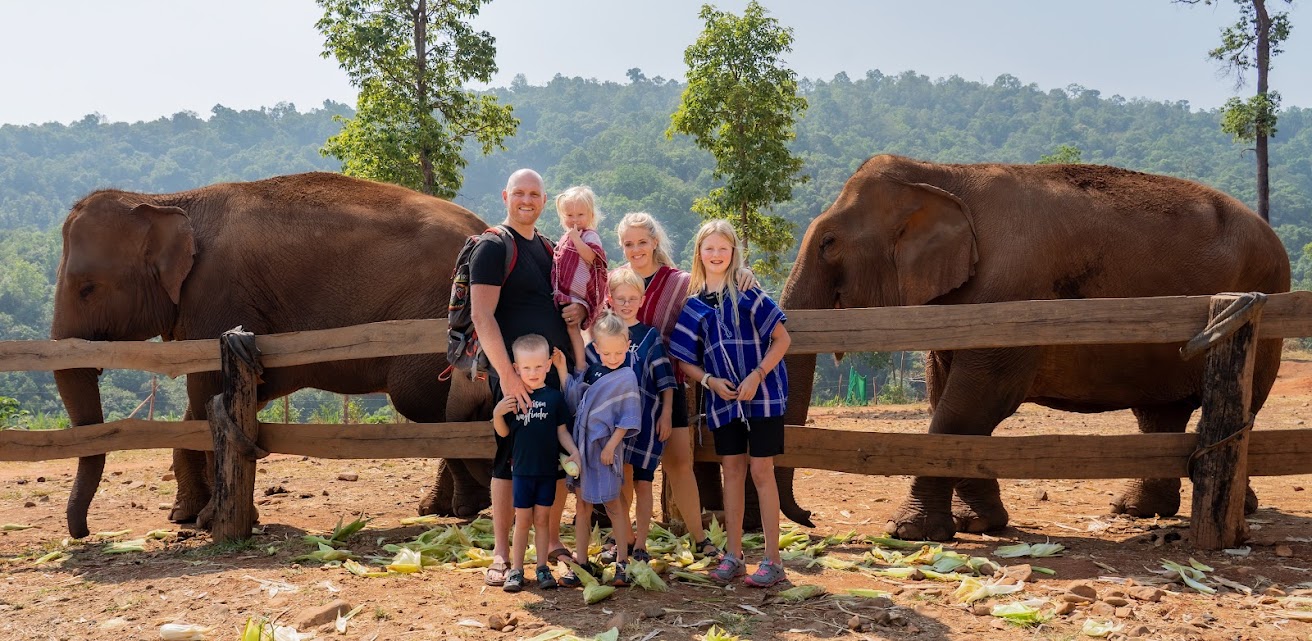
We took five young children to visit elephants and had an amazing time. In fact, we visited elephants three times! Once for our first encounter, the second to do some photos (we hired a photographer to capture the special moments) and a third time we had as a bonus, as our local friend took us to a more local experience. We then spent the night in a traditional house with a local family, which was a very unique experience.
Top highlights of our three encounters?
Imagine your family with magnificent elephants—watching them interact, walking beside them and maybe even getting to feed them. This was a dream of mine for years before we began full-time travel, and I was thrilled when we were able to make it a reality in Thailand!
But before we dive into the details, let’s talk about something important: elephants can be a sensitive topic.
In the past, we visited Tiger Kingdom in Chiang Mai and later received negative feedback about that choice. I had not researched the welfare concerns thoroughly beforehand. It was a wake-up call to investigate animal experiences more carefully; our visit did not give us independent knowledge of how the animals were trained or managed.
Chiang Mai, and Thailand in general, offers many animal experiences for profit. On our last trip, just last month, we visited a petting zoo with a raccoon! I’m not sure how ethical it was, but the animals seemed well taken care of. It’s important to try to put your money behind places that do what is best for the animals involved.
Watch our original related film on YouTube
*Disclaimer: This post may contain affiliate links. Opinions shared are my own, and I only endorse products I support. By clicking on any of the links below, I may get a small commission if you purchase at absolutely no additional charge to you. I appreciate your support.*
Elephants are incredible creatures that deserve respect, so when choosing a sanctuary, here are a few things to keep in mind:
It’s considered inhumane to ride elephants for tourism. We actually didn’t know this at first, but thankfully did not choose a sanctuary that did this. We know to avoid any sanctuary that offers rides to visitors.
You might still see locals riding elephants—this is often tied to traditional practices—but as a general rule, repeated tourist rides can harm the animals over time. Imagine people getting on your back all day!
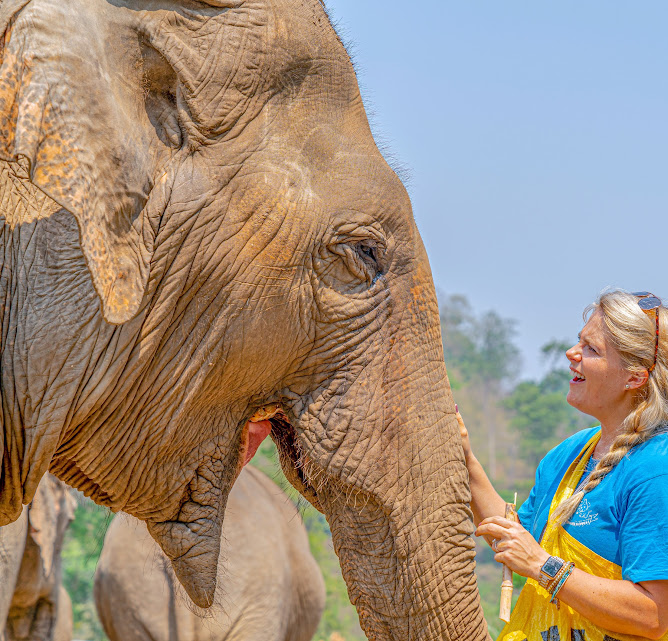
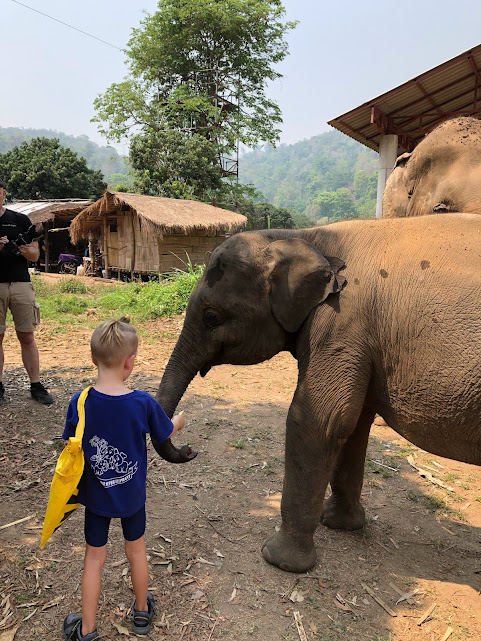
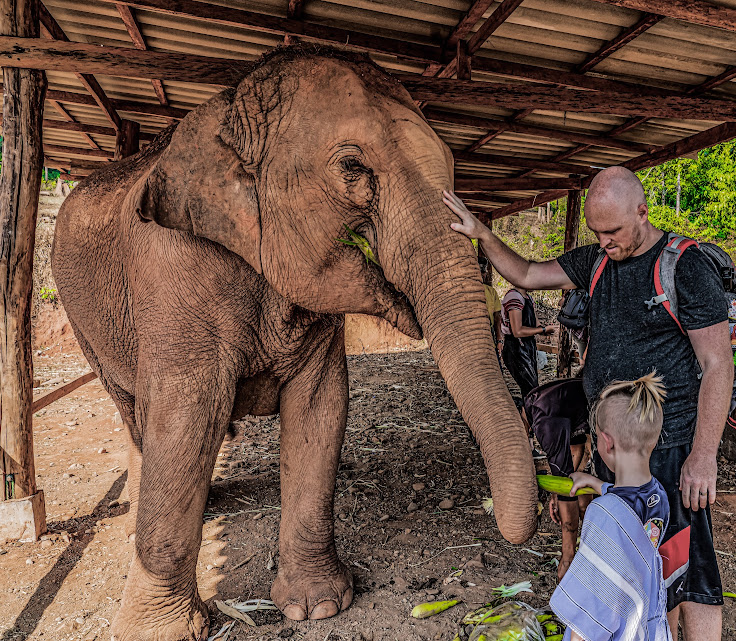
Look for sanctuaries that prioritize letting elephants be elephants. That means observing them in their natural behaviors rather than forcing interactions. In our case, we walked alongside elephants to a water hole, helped prepare their “daily vitamin” treats and cut up sugar cane for them (a process that nearly cost me a finger thanks to my questionable machete skills!) and had gentle feeding interactions.
We observed elephants doing a lot more as well: playing in the mud, splashing in the river and eating plants as we walked. All of it is enjoyable, I promise! They are fascinating creatures.
Elephant venues differ, and “sanctuary” or “no riding” does not by itself establish welfare standards. Use independent welfare guidance, including World Animal Protection’s visitor guide, and check any claimed accreditation with the organisation that actually issues it. The Asian Elephant Alliance strategy linked in our older guide was not proof that a tourist venue had been certified.
Supporting with your dollar means a lot in Chiang Mai, and it’s important that those dollars support your beliefs also.
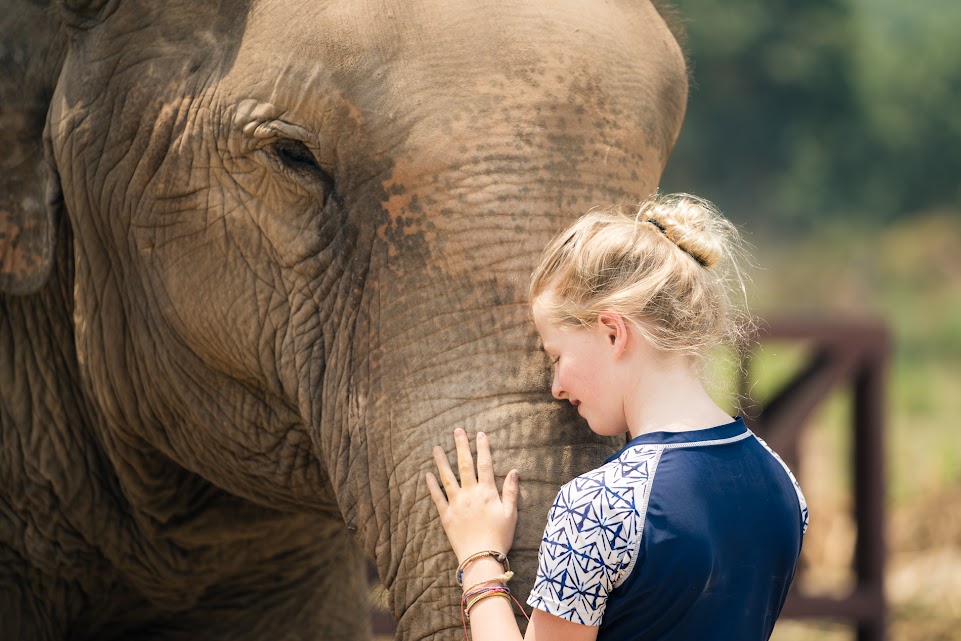
I would not call myself an animal activist, but once you see elephants in person, you’ll also want what is best for them! This is part of the experience’s beauty. When we know and love something, we want to protect it.
There are many ways you can identify if an elephant sanctuary is ethical. Meaning, if they care about their well-being, or they just do it for entertainment purposes. So, here are a few examples on how to identify them:
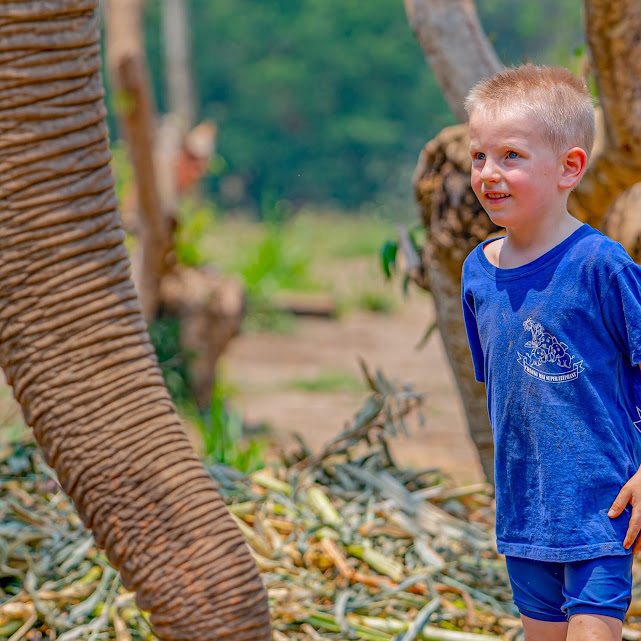
Research can help you make a more informed choice, but a website or good reviews cannot guarantee welfare or your family’s safety. Ask specific questions about visitor contact, training, handling, rest, and opportunities for elephants to behave naturally.
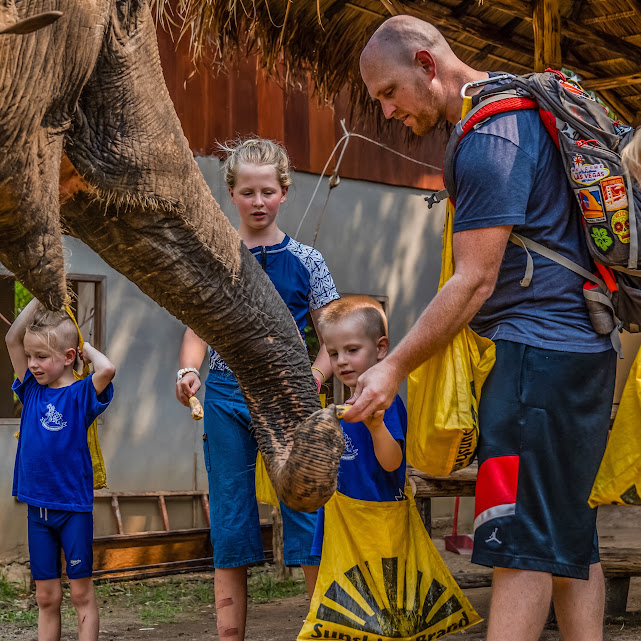
We made three different visits to elephants while in Chiang Mai. Thankfully, we were there for a month, so we had time for those separate experiences. The memories below include hands-on activities we took part in at the time; describing them is not independent confirmation of welfare standards or a recommendation to repeat those activities now.
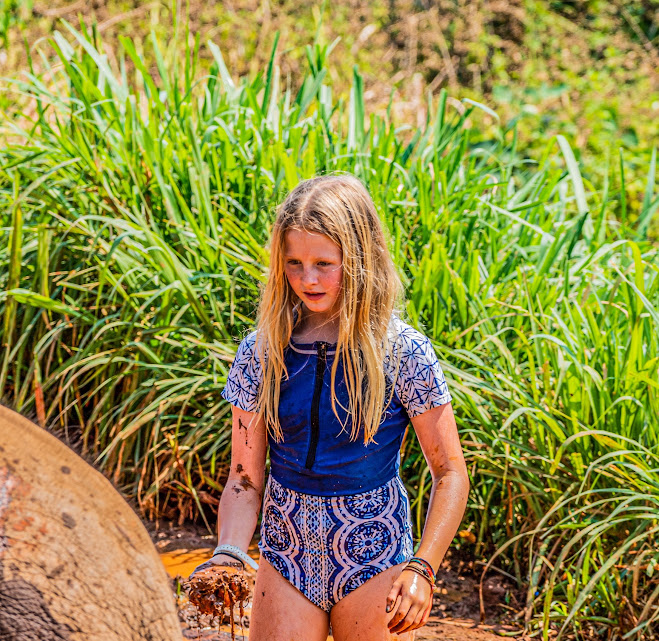
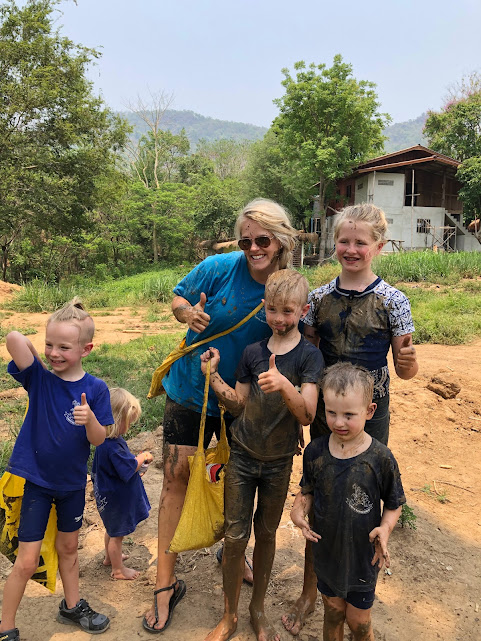
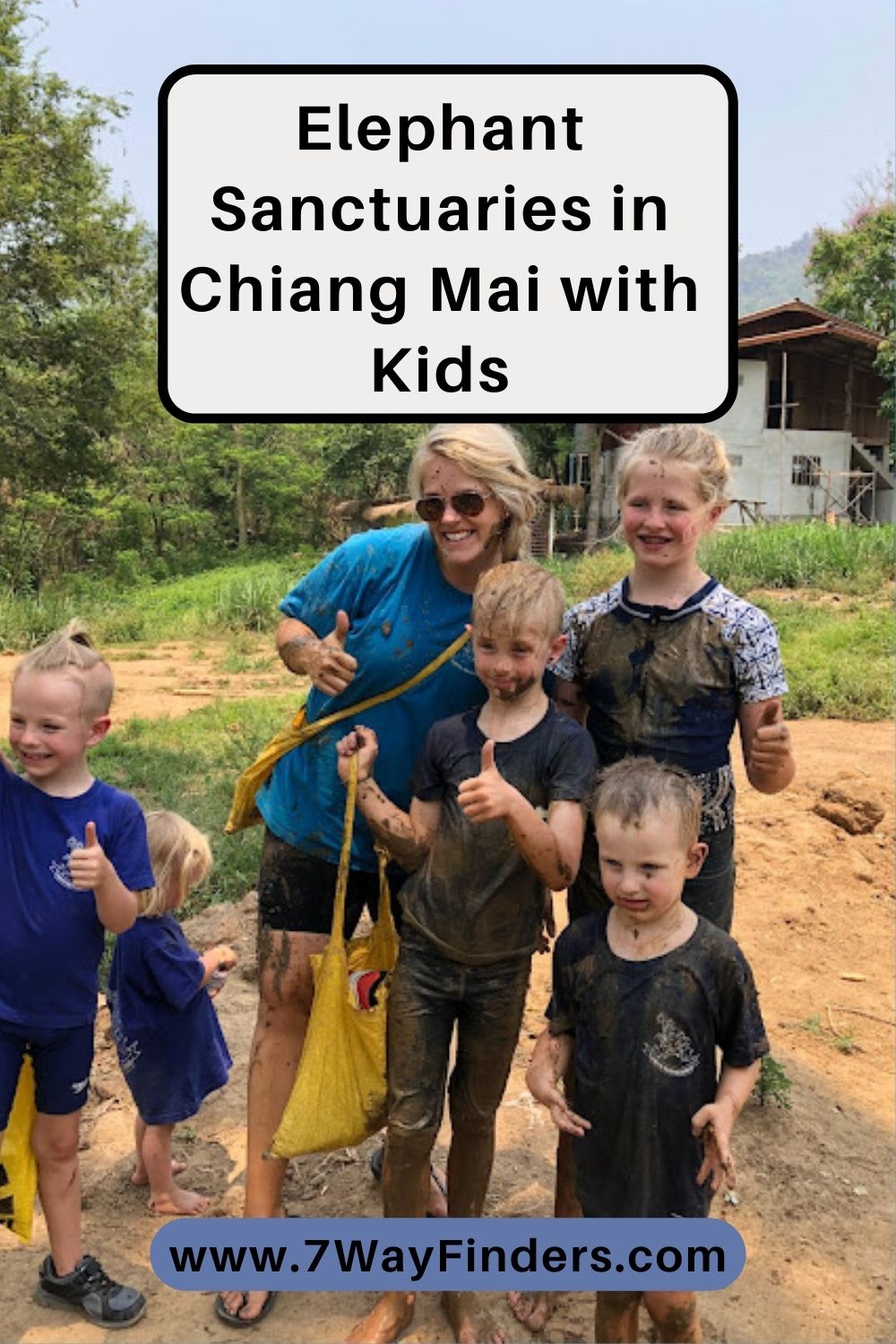
The first encounter we had was very touristy. We observed the elephants, watched them walk to a mud hole and everyone was then invited to join the elephant in the mud and rub mud on their back if desired. We were watching the elephants poop and pee into the mud, so most of my kids opted out of this! However, I jumped right in! Eventually, a couple of my kids got over their fear and joined me. I loved getting into the mud and watching the elephant enjoy this experience.
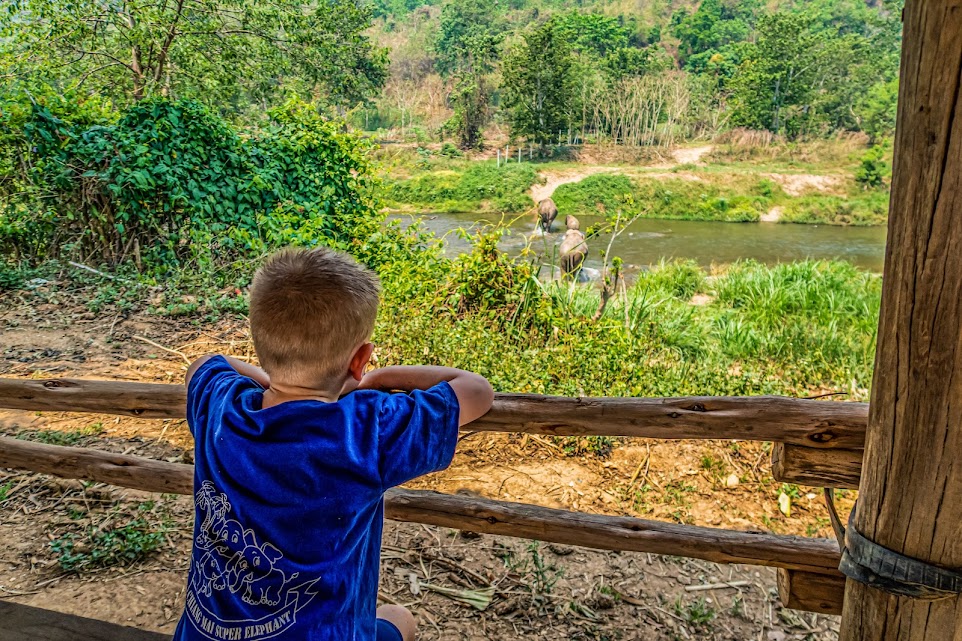
Side note: Did you know there is a company in Chiang Mai that makes paper out of elephant poop?? It’s a fun additional activity to do with kids! We bought some journals to take home.
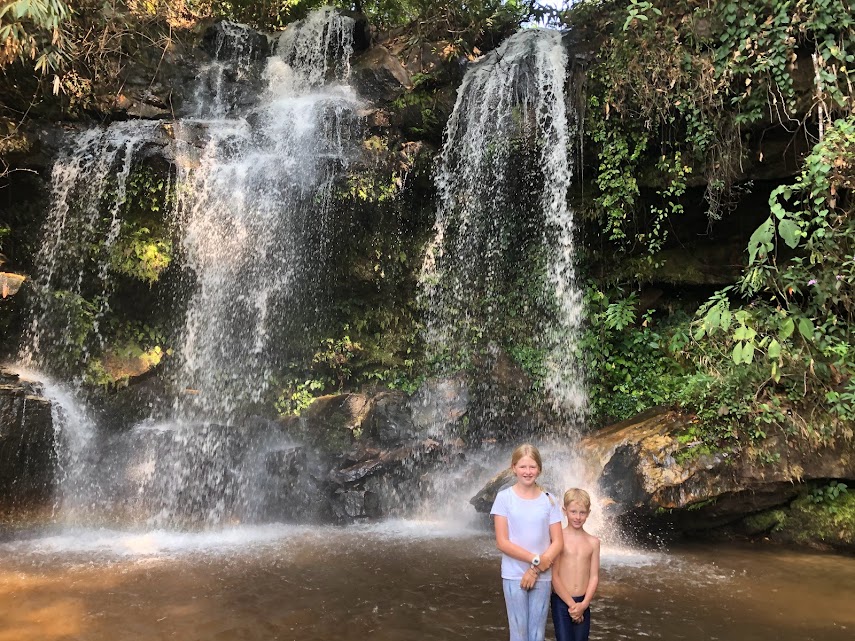
Afterwards, we were invited to a waterfall to wash off and cool off, while the elephants also could enjoy the water. They were eventually led to another part while we enjoyed lunch and were shuttled back to our hotels.
For our second visit, we hired a photographer to go with us. I couldn’t pass up the opportunity to capture some family shots with elephants! I really loved this opportunity. We also fed the elephants sugar cane while the photographer took some shots.
Watch our original related film on Vimeo
From grumpy beginnings to happy endings… Harrison LOVED this elephant moment.
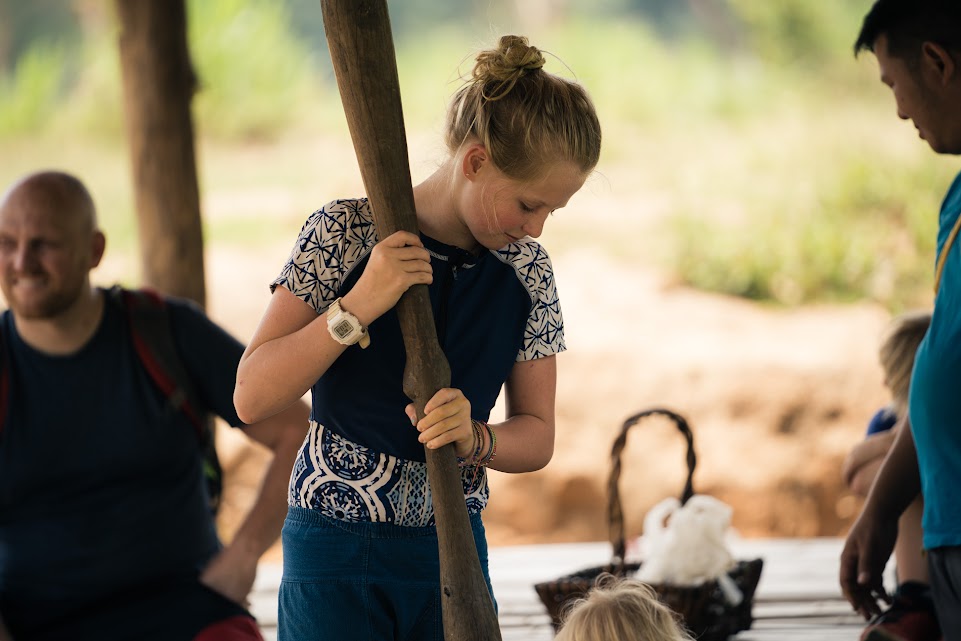
After we took some photo shoots, we changed and then went to make the elephant vitamin. This was a mixture of several different compounds, some of which were a bit unpleasant to smell! However, the elephants knew what to expect and were excitedly waiting nearby to get their treat!
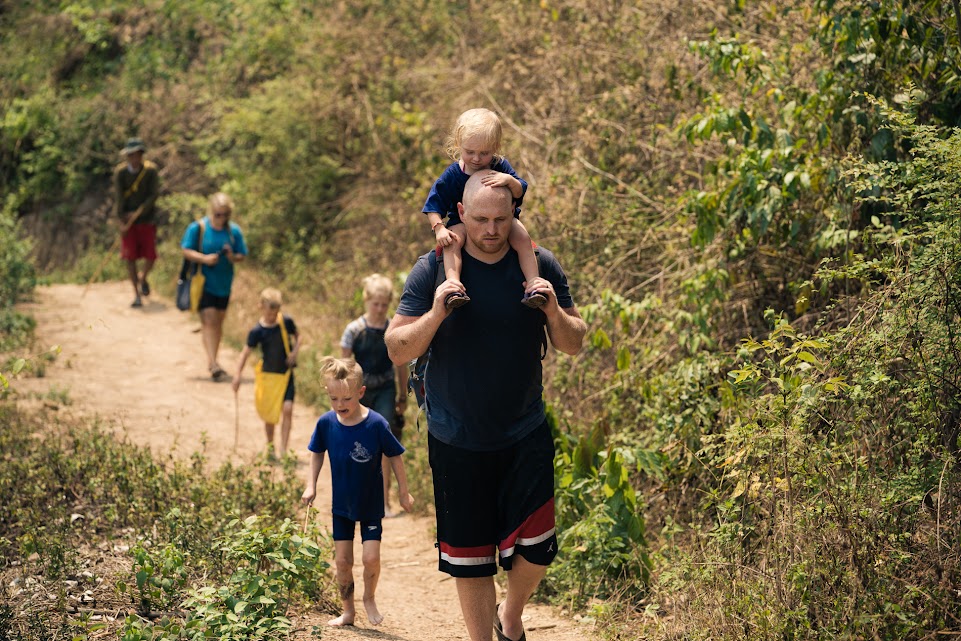
We then took a walk with the elephants through the jungle for about an hour. It was hot and we were sweaty, but it was fun to watch them walk in the forest. My husband did have to carry our little one for a while, which was tough, but worth it. We went to a mud hole in which the elephants covered themselves in mud (and we lost a shoe!).
Finally, we walked back to a river where the elephants enjoyed cooling off in the water. Our kids also loved splashing in the water and washing off.
Finally, at the end, we cut sugar cane for the next visitors! The kids LOVED this part and I did until I cut off most of my fingernail. However, it all healed ok and we moved on!
Both our first and second encounters included a traditional Thai lunch. Check the exact package if you book another visit; meals, transfers, clothing, and other inclusions vary.
As I mention in my post about our overnight Thai visit, we were able to visit a baby elephant! This was a fairly short visit (we didn’t walk or feed them), which was probably due to this being more of a local experience and due to the baby’s age.
It was still really special to see the herd and the baby. We learned something on each visit, but we would not use a story about elephants finding people “cute” as evidence that an animal wants contact or is safe to approach.
The films below record our past hands-on experiences. The longer film is labeled “Day 2,” but that label does not establish the order of all three encounters described above. These memories are separate from the observation-first welfare guidance earlier in this article.
One of our Chiang Mai elephant days, plus the paper-making stop · Full film (15 min 17 sec)
Playback isn’t available here. Open the full film on Vimeo ↗
This film is labeled “Day 2” and includes family conversations, feeding, preparing food, time beside the elephants, and a separate paper-making stop. It does not establish the chronology of all three encounters described in the article.
Our past visits included feeding elephants, and this scene shows the guide approaching them before the children offer food from yellow bags. It records what happened on that filmed day; it is not evidence that close contact is safe or that a venue meets current welfare standards.
Feeding footage from a past Chiang Mai visit · Scene from our film (20 sec)
Playback isn’t available here. Open the full film on Vimeo ↗
I remember making a mixture for the elephants during one of our encounters, including ingredients with quite a strong smell! In the longer film, the guide explains a mixture while the children help pound it in wooden mortars. We described it as an elephant vitamin; it was a visitor activity, not medical treatment.
The children helping prepare an elephant food mixture · Scene from our film (20 sec)
Playback isn’t available here. Open the full film on Vimeo ↗
The paper-making stop was a different kind of memory from our time with the elephants. We bought journals to take home, and this scene shows pulp being stirred, baskets of material, and paper and notebooks at Elephant PooPooPaper Park. The journal selection itself is part of my written memory; I’m not claiming it is shown in this excerpt.
The separate elephant-dung paper-making stop · Scene from our film (20 sec)
Playback isn’t available here. Open the full film on Vimeo ↗
Seeing a baby elephant was one of the special memories from our shorter village visit. This separate film also includes a young elephant beside our family and a later muddy-pool scene. It contains several activities, so I keep it distinct from the day-by-day details of our three written accounts. Watch that separate full film on Vimeo.
A young elephant in our separate Chiang Mai film · Scene from our film (20 sec)
Playback isn’t available here. Open the full film on Vimeo ↗
Another short elephant memory from our archive. Its precise venue and place in our visit sequence are not established here.
The linked experiences below are booking options from the guide, not independent welfare approvals or accounts of our own visits to every named venue. Review the current activity list and independent welfare guidance before booking. If observation without contact is your priority, confirm that feeding, touching, bathing, and posed elephant photos are excluded rather than relying on an “ethical” label.
The linked Pon Elephant Sanctuary programme has been described with feeding, walking, treat preparation, and possible washing or bathing. Those are contact activities, not proof of welfare or an observation-only visit. Confirm the operator, current programme, child restrictions, and contact policy directly before booking.
Our older listing quoted about five to five-and-a-half hours and prices from $25 USD per person. Treat these as historical planning figures, not a current offer. Confirm transfers, duration, clothing, food, insurance terms, and activities for the exact product; a package’s inclusions do not establish animal welfare or eliminate risk.
Elephant Jungle Sanctuary in Phuket advertises a “Feed Me” programme involving elephant feeding. Check the operator’s current description and assess it against independent welfare guidance. A feeding programme is not an observation-only experience, and the marketing label “ethical” is not independent certification.
No venue description can guarantee that close contact is safe for a child or stress-free for an elephant. The operator’s FAQ requires close parental supervision and notes that programmes vary. Ask about the exact activity, child eligibility, viewing boundaries, and how to decline contact before booking.
Our older listing described roughly one hour and prices from about $28 USD per person. Check the current programme’s rate, duration, transport, and inclusions. A short visit or affordable price is not a welfare assessment.
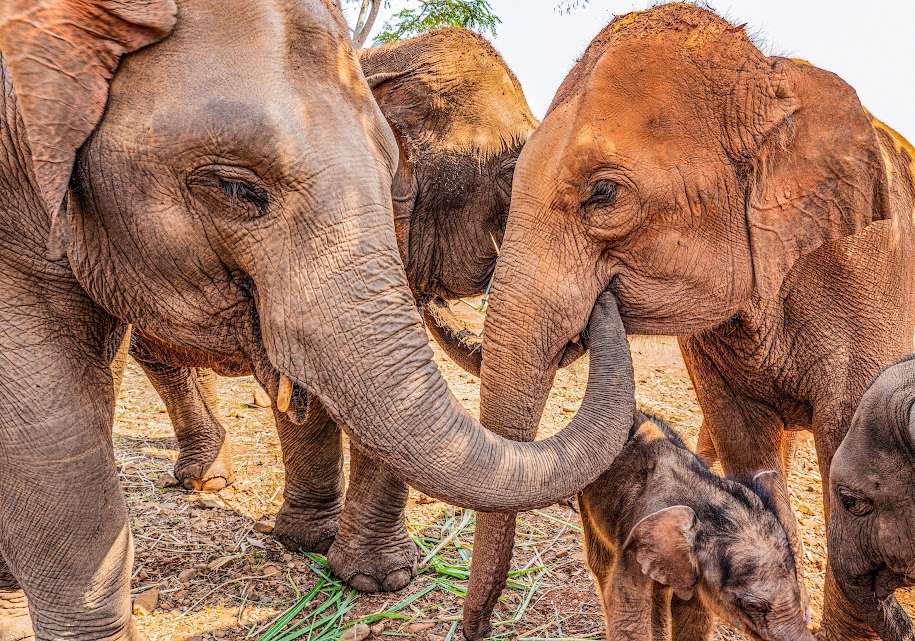
Grace and strength in every step, truly magical creatures.
If you’re traveling with children, elephant sanctuaries can be a magical experience. Here’s what we found helpful:
Most elephant sanctuaries include a complimentary lunch option and water. But there are still a few things I recommend that you bring. Here are some essentials you should consider:
Depending on your schedule, if your kids can handle a long day or your trip goals, there are many different options for visiting elephant sanctuaries. Also, some elephant sanctuaries offer private and group options. Here are some great tours that include transportation:
Visiting an elephant sanctuary in Chiang Mai was one of our most memorable travel experiences as a family. We left feeling connected to these gentle giants, and the kids still talk about “their” elephants months later.
If you make the trip, look for a venue that puts the elephants’ welfare first and offers observation without tourist contact. Our muddy, hands-on memories are part of our past family travels; they are not a welfare recommendation for a new visit.

Check out your travel necessities from a comprehensive list of all the 7Wayfinders Travel Must-Haves. Click Here!
Get insured while traveling with World Nomads / SafetyWing
Want to have a photo shoot while traveling? Check out flytographer!
Capture your best memories in Chiang Mai as we do with a GoPro, Sony camera, or our favorite drones: DJI FPV, Air, and Mini
Check out your travel necessities from a comprehensive list of all the 7Wayfinders Travel Must-Haves. Click Here!
Bangkok with Kids: Top 13 Things to Do
Bangkok Travel Guide: 11 Tips, Tricks and Takeaways
Hong Kong with Kids: A Family Adventure You’ll Never Forget




 Facebook
 Pinterest
 Youtube